

45.7K
Downloads
48
Episodes
Honest conversations with the rare community, led by our hosts, David Rintell and Mandy Rohrig of BridgeBio.

On Rare
Honest conversations with the rare community, led by our hosts, David Rintell, head of patient advocacy at BridgeBio, and Mandy Rohrig, associate director of patient advocacy at BridgeBio Gene Therapy.
Episodes

Friday Jun 02, 2023
Friday Jun 02, 2023
Lacey joins David Rintell, Head of Patient Advocacy at BridgeBio to talk about how LGMD2I/R9 has impacted her life. When Lacey was 16, she was diagnosed with a progressive neuromuscular disease, known as LGMD. The only question she had for the doctor was whether she could one day become a mother. Without additional explanation, she was told that LGMD2I would keep her from having children. For years, Lacey lived in denial. Despite the limitations of her disease, she charged ahead with her life. She runs a business with her husband. She is a wife, mother, and foster parent. And in 2007, when she received the diagnosis of LGMD type 2I, she became an advocate for her LGMD2I community when she formed an LGMD2I Facebook group so that people with LGMD2I could connect and share information.
Anna Wade, Ph.D., Chief Operating Officer at ML Bio Solutions, a BridgeBio company, provides an overview of LGMD2I. She explains how LGMD2I, a neuromuscular disease, progresses and how it damages the muscles throughout the body.
Friday Apr 07, 2023
Friday Apr 07, 2023
Kristen joins David Rintell, Head of Patient Advocacy at BridgeBio to tell her personal story about living with achondroplasia and how she became an advocate at just six years old. By third grade, Kristen was speaking to classrooms about what it is like to live with achondroplasia. In the episode, Kristen shares how she has dealt with health issues, overcame adversity and even published her story in the book, Little Legs, Big Heart. She explains that achondroplasia isn’t just about height – there are other important quality of life concerns which she has learned to address, while also helping other families navigate the condition.
Anne Lee, Senior Director of Global Patient Advocacy at BridgeBio, provides an overview of achondroplasia, the most common form of dwarfism. She explains how achondroplasia affects a protein in the body called the fibroblast grown factors receptor 3 or FGFR3, which results in slowing down bone growth. Achondroplasia is the most common cause of disproportionate short stature, affecting approximately 55,000 people in the United States and European Union, including up to 10,000 children and adolescents with open growth plates. Anne talks about her work in patient advocacy and what she has learned by listening to people and families living with achondroplasia.
Tuesday Feb 28, 2023
Tuesday Feb 28, 2023
Veronica joins David Rintell, Head of Patient Advocacy at BridgeBio to tell her son Brent’s story. When Brent was nine, his family discovered that he had a rare genetic disease called Pantothenate Kinase-Associated Neurodegeneration (PKAN), a condition without any available treatments. Veronica shares how she and her family have supported Brent as he has stubbornly and victoriously succeeded in giving his valedictorian speech in high school, attended community college, and started a local gelato business.
Mallory Harden, Ph.D., Director of Business and Operations at CoA Therapeutics, a BridgeBio company, provides an overview of PKAN. She explains how PKAN is a progressive and fatal neurodegenerative disease which is often diagnosed in childhood. As it progresses, people are faced with uncontrolled movements, walking and balance challenges, and cognitive changes.
Wednesday Jan 11, 2023
Wednesday Jan 11, 2023
In part two of our series on ALS, amyotrophic lateral sclerosis, Holly and Beth, two women whose husbands died from ALS, (also known as Lou Gehrig’s disease) continue their conversation with David Rintell, head of patient advocacy at BridgeBio. They describe the bond they developed over their shared experience and how they continue to offer support to others who have experienced an ALS diagnosis.
Listen to part one to hear Rachel Groth, Ph.D., vice president and head of neuroscience research at BridgeBio, provide an overview of ALS, a fatal neurodegenerative disease that affects nerve cells in the brain and spinal cord.
Thursday Dec 15, 2022
Thursday Dec 15, 2022
Holly and Beth, two women whose husbands died from ALS, amyotrophic lateral sclerosis, (also known as Lou Gehrig’s disease) join David Rintell, head of patient advocacy at BridgeBio to share their experience. ALS is a progressive and fatal neurodegenerative disease that affects nerve cells in the brain and spinal cord.
Rachel Groth, Ph.D., vice president and head of neuroscience research at BridgeBio, provides an overview of ALS. She explains how this devastating disease is characterized by the selective and progressive loss of motor neurons, which are cells in the body and brain controlling muscle movement. As the disease progresses, it results in paralysis of nearly all skeletal muscles.
Monday Oct 31, 2022
Monday Oct 31, 2022
The birth of Jihan’s first daughter, Bella, was traumatic. She and her husband were totally unprepared for the diagnosis of congenital adrenal hyperplasia (CAH) and struggled with the way the news was delivered to them. Their health care providers failed to provide adequate instructions about the care of a baby who is fragile due to adrenal insufficiency. The first two weeks of Bella’s life were frightening, as her parents tried to get the care that she needed and learn how to care for her at home. Twelve years later, Jihan’s youngest daughter, Alessia was also born with CAH. This time they were prepared.
Adam Shaywitz, endocrinologist, and Chief Medical Officer at BridgeBio Gene Therapy provides an overview of CAH. He describes how CAH affects the adrenal glands, two tiny walnut sized organs which rest on top of the kidneys. The adrenal glands produce critical hormones which regulate blood pressure and play a critical role in how the body manages stress. With too little of these important hormones, patients can go into adrenal crisis, which can be life threatening.
Wednesday Oct 05, 2022
Wednesday Oct 05, 2022
At birth, Jessica’s physician noticed she had low levels of calcium. Genetic testing later confirmed that she had autosomal dominant hypocalcemia type 1 (ADH1) with a calcium receptor (CaSR) gene mutation. Jessica had complications due to ADH1 quite early in life. Before Jessica started kindergarten, she had painfully passed her first kidney stone. Fiercely protective and attentive, Jessica’s mother quit her job to take care of Jessica full-time. She researched and provided Jessica with the latest cutting-edge treatments.
Despite the challenges of living with ADH1, Jessica has done well. She is a hopeful, new mother who is ready to do whatever it takes to take care of her child. She has a graduate degree and works to provide mental health care for her clients.
Mary Scott Roberts, M.D., senior director of clinical development at BridgeBio Cardiorenal, joins to provide an overview of ADH1. She describes how low or elevated levels of calcium can cause muscle cramps, brain fog, fatigue, seizures, and other symptoms in individuals living with ADH1.
Thursday Sep 01, 2022
Thursday Sep 01, 2022
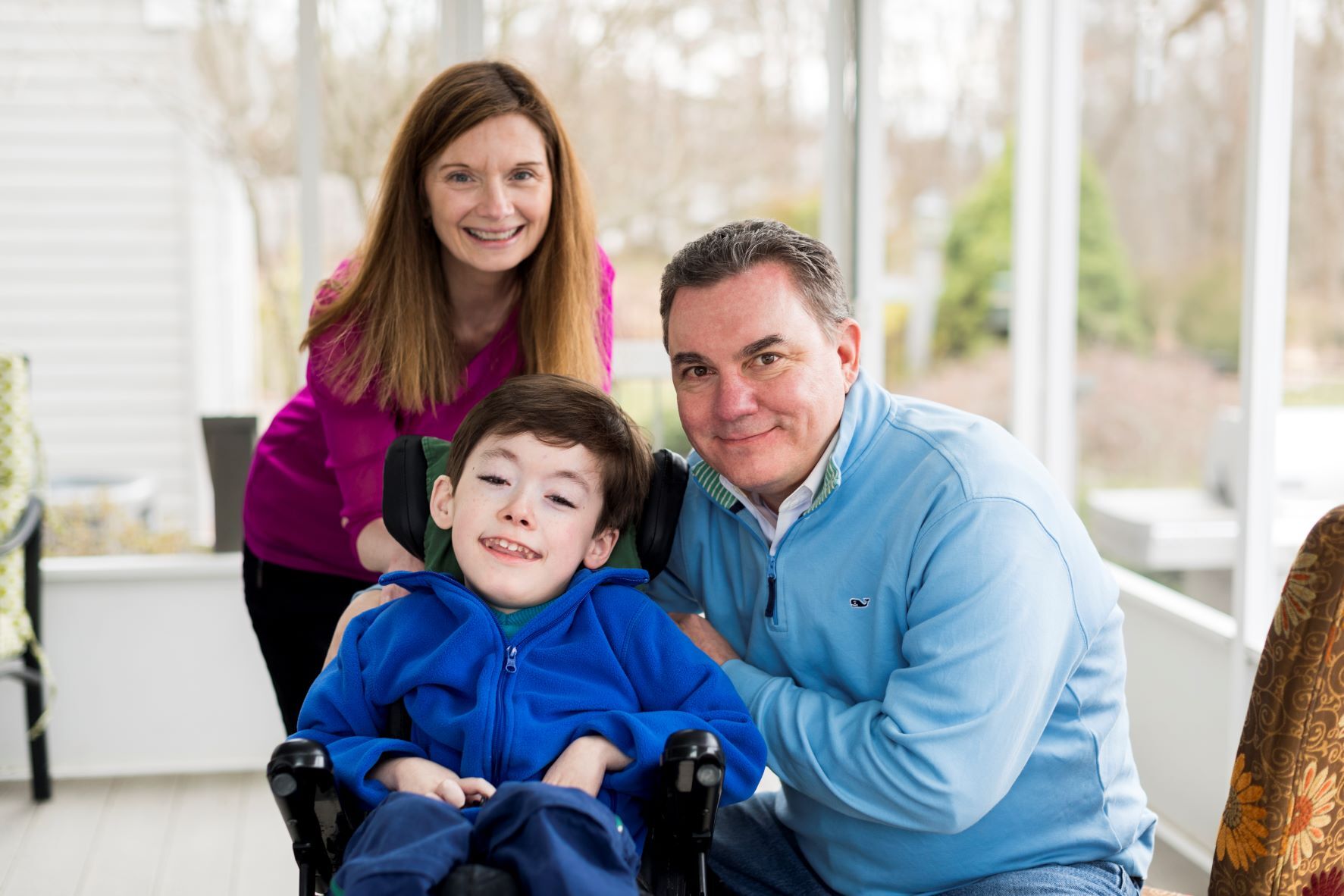
In this month’s episode of On Rare, David Rintell speaks with Cliff and Noreen, the parents of Dylan, a playful, adopted, 15-year-old living with Canavan disease. It’s a heartwarming, funny and poignant conversation about Dylan’s life, the challenges of providing constant care for a severely disabled child and the joy he brings them. As parents of a child with an ultra-rare, fatal genetic condition, Cliff and Noreen live day by day. As Cliff explains, “We focus on what we have now with Dylan and the good times.”